Activity 2
Define the Problem
▼
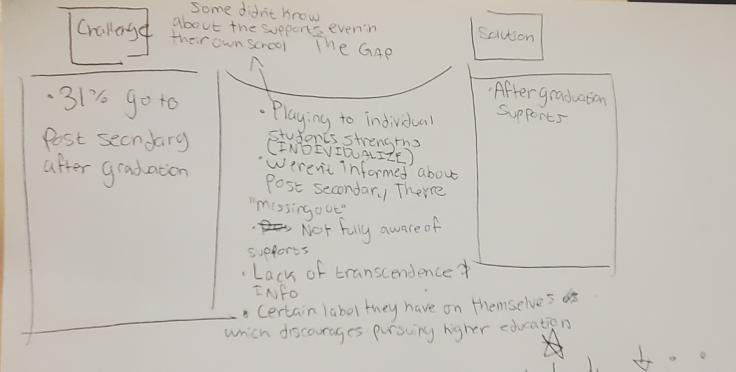
The second activity allowed us to utilize our primary and secondary research abilities and put the information which we gathered to use, by defining the problem and creating a "How Might We" question. For this activity, we were instructed to analyze the resources provided in the case study regarding a problem which the YMCA is facing.
These resources consisted of 6 interviews for the primary research, as well as a couple of YMCA presentations as secondary research. After analyzing the resources, we were to create a Point of View (POV) Statement based on the target audience. Lastly, we had to come up with a variety of creative "How Might We" (HMW) questions, and pick one that we found the most suitable to face for the topic at hand.
YMCA Students at the academy need to have purpose and information/opportunity to support their aspirations because the academy lacks playing to individual students strengths pertaining to post secondary programs.
When deciding on a How Might We question, I chose to focus on a specific part of the problem, individual post-secondary education, rather than trying to address the broader issue. By narrowing my focus, I was able to identify a more targeted and effective question that would really get to the heart of the problem. Though I initially considered coming up with a HMW question that concentrated more on the distribution of information to students, I eventually realized that this would only cover part of the issue. The problem isn't just about getting information to the students; it’s also about how the YMCA can better support each student’s unique strengths and needs.
I felt that by focusing on individual strengths, the YMCA could create more personalized opportunities for each student. This approach would allow them to tailor their support to better equip students for their post-secondary journeys, helping them feel more confident and motivated. In the end, I realized that addressing the strengths and potential of each student would be a more impactful way to provide the necessary support and guidance, ensuring that every student has the tools they need to succeed.